Have you seen smoke or fire? REPORT ALL FIRE EMERGENCIES, CALL 000.
If you are deaf, or have a hearing or speech impairment, CALL 106.
Please DO NOT CALL Majors Creek Fire Station as it is only attended when training or maintenance are taking place.
About us
Our Brigade is one of 22 volunteer brigades in the Lake George Zone of the NSW Rural Fire Service. The NSW Rural Fire Service's (RFS) 76,319 volunteers and 965 staff provide fire and emergency help to about 95% of NSW.
WE LOVE VISITORS – come and say hello at the fire station on Hill Street, Sunday mornings from 9am until 10am. Members of the Brigade are always happy to share a cuppa. Phone: (02) 6238 3396 (during training and maintenance times only), or contact:
• Captain: Mr Richard Elliott, email: lambdas@optusnet.com.au], or call 0429 329 666 or 48 461 096.
• Secretary and Treasurer: Ms Chris James, email: [bcj@activ8.net.au], or call 0408 461 044.
To volunteer, please contact the Secretary, Ms Chris James, email: [bcj@activ8.net.au], phone: 0408 461 044.
FACT: There is an increased risk of grass fires in the 2021-2022 fire danger season. Learn more on the NSW RFS website. "Grass fires" (Fact sheet PDF, 753.3 Kb)
Plan & prepare
The catastrophic 2019/2020 bush fires showed us the devastating effects of bush fire on people, animals, property and land; and the importance of planning and preparing.
Remember – don't wait for a warning. There may not be enough time for a warning. Know your bush fire alerts. If you plan to leave, you should leave long fire is in your area.
Please take a minute to watch this video and think about how you will prepare, and what you will do if fire threatens. Bush Fire Fact - Making your bush fire survival plan [Video, 1.03 mins]
“Some who stayed and defended their property in the 2019/2020 fires said they would never do it again. They knew they had survived by the skin of their teeth. People can't imagine the dark, the heat and the noise. Conditions proved much worse than expected when pyrocumulus clouds (fire clouds) collapsed.”
Make a Bushfire Survival Plan
Will you leave early or stay? Leaving early is your safest choice. If you plan to stay, are you prepared and equipped to defend your property? To make your plan, please consider:
- If fire threatens, will you leave early or prepare to stay? Leaving early is your safest choice.
- What will be the sign for you to leave?
- What are you planning to pack in your vehicle(s), and how long will that take?
- Where will you go and how will you get there?
- What’s your back up plan? Know an alternate route to a safer place.
- What about your animals?
- Are you able to prepare your home and property? Do not stay and defend unless you have carefully planned and prepared.
- Have you discussed this with your family/ friends/ neighbours?
- You may not be able to use your mobile or the internet when fire threatens.
- Is your insurance adequate and up to date?
- What’s your Plan B? If you decide to stay and defend your property, and the fire proves to be worse than expected, do you have a fire bunker or safer place for refuge?
Emergency kit
Do you have an emergency kit with long-sleeved shirt and pants made from a natural fibre such as cotton, sturdy leather boots and woollen socks, leather gloves, a wide-brimmed hat, a face mask or towel to cover your mouth and nose, eye protection such as smoke goggles, torches and spare batteries (the power may go down), a radio with batteries, spare batteries, legal documents, contacts and fire blankets?
More information
"Bushfire Survival Plan" NSW RFS website
"Your Bush Fire Survival Plan - No Plan" (Fact sheet PDF, 620.9 Kb)
“Get ready for a bushfire” (Fact sheet PDF, 2.7 Mb)
"Leave early, your safest choice" (Fact sheet PDF, 650.4 Kb)
“Fire safety for your pets” (Fact sheet PDF, 783.9 Kb)
"Livestock and Large Animals" (Fact sheet PDF, 938.2 Kb)
TOP 5 ACTIONS TO PREPARE YOUR HOME FOR BUSHFIRE
It’s a fact. If you and your home are well prepared, you stand a better chance of surviving a bush fire. A few small actions now could make all the difference if fire threatens your home:
-
Trim overhanging trees and shrubs. This can stop the fire spreading to your home and make it possible for a fire truck, if one is available, to gain access to your place.
-
Mow grass and remove the cuttings. Having a cleared area around your home will give you and/or firefighters a safer area to work.
-
Remove material that could burn from around your home. This includes door mats, wood piles, mulch, leaves, outdoor furniture, plastic pots, umbrellas, synthetic turf.
-
Clear and remove all the debris and leaves from the gutters around your home. Burning embers can light debris and set your home on fire.
-
Prepare sturdy hoses that will reach all the way around your home. Make sure you have a reliable source of water (pool, tank, dam) and a diesel/petrol pump available. Pumps need to be protected from radiant heat, and hoses have to be taken inside while the fire front passes.
More information
"Prepare your home" NSW RFS website
"Prepare your home" (Fact sheet PDF, 697.2 Kb)
"Prepare your property" (Fact sheet PDF, 1.1 MB)
"Bushfire and your home" (Fact sheet PDF, 697.2 Kb)
Bushfire Alert Levels
Remember – don't wait for a warning. Some fires start and spread so quickly there may not be any time for a warning. If you plan to leave early, you should leave long before the fire is in your area.
There are three levels of Bush Fire Alerts used to indicate the level of threat from a fire. Know your bush fire alerts.
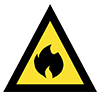 Advice
A fire has started. There is no immediate danger. Stay up to date in case the situation changes.
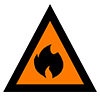 Watch and Act
There is a heightened level of threat. Conditions are changing and you need to start taking action now to protect you, your family and animals.
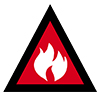 Emergency Warning
An Emergency Warning is the highest level of Bush Fire Alert. You may be in danger and need to take action immediately. Any delay now puts your life at risk.
Fire Danger Ratings and Total Fire Bans
The six Bush Fire Danger Ratings indicate the likely severity of a fire, if one was to start:
- Low to Moderate
- High
- Very High
- Severe
- Extreme
- Catastrophic.
More information
"Emergency Bush Fire Information & Alert Levels" (Fact sheet PDF, 607.5 Kb)
"Fire Danger Ratings and what they mean for you." NSW RFS website
A Total Fire Ban (TOBAN) means no fires out in the open, not even a wood-fired pizza oven. Heavy penalties apply if a TOBAN is broken Learn more on NSW RFS website...
"Total Fire Bans" (Fact sheet PDF, 373.6 Kb)
Planning to burn a pile of vegetation or carry out a hazard reduction burn? It’s now fire season and you need a permit.
The official Bush Fire Danger Period began on the1st October 2021 and runs until 31 March 2022. If you are planning to light a fire in the open during this time, you need a Fire Permit.
How do I apply for a Fire Permit?
Contact the Brigade Captain, Mr Richard Elliott, email: lambdas@optusnet.com.au, or call 0429 329 666 or 48 461 096, OR Scott Hart on 0429 007 595.
The Bush Fire Danger Period doesn't mean you can't use fire - but restrictions apply to ensure safety. If a Total Fire Ban is in force, all fire permits are automatically suspended. You can check whether a Total Fire Ban is in place on the RFS’s Fire Danger Ratings and Total Fire Ban webpage.
• If you have a fire permit, please register your intended burn at least 24 hours before lighting. Registering a burn is compulsory for 365 days of the year, partly to avoid unnecessary calls to emergency. Online at: http://www.rfs.nsw.gov..au/notify
• Also, notify your neighbours at least 24 hours before lighting up.
What is a fire permit?
A fire permit defines the conditions for an intended burn, such as:
- the fire must be supervised by an adult at all times,
- notifications are given to the NSW RFS, and neighbours at least 24 hours before lighting,
- the permit may be varied, cancelled or suspended, depending on weather conditions.
More information:
"Before you Light that Fire", a fact sheet full of useful tips (Fact sheet PDF, 2.968 Mb)
"Handy hints for pile burning" (Video)
Volunteer and training
Do you live in the Majors Creek area?
If so, please come along and meet your local Rural Fire Brigade. We love visitors and welcome all new members. Our Brigade is a community-based, volunteer organisation.
To volunteer, please contact Ms Chris James, Membership Secretary, on 0408 461 044 or email: [bcj@activ8.net.au].
Don't have much time?
There are many ways to help the RFS Brigade. As well as actively fighting fires, volunteers can help with communication and radio systems, maintenance of equipment, catering, community education, administration, logistics, and participating in essential fundraising activities. The level of involvement is a choice for each community member.
Training
Majors Creek Brigade members train every second Sunday of the month, between 9.30 am and 12 noon at the Majors Creek Brigade Fire Shed, Hill Street, Majors Creek.
Many volunteers have had little experience fighting fires before joining the Brigade. The Rural Fire Service (RFS) provides training to make sure members have the skills to handle all aspects of operational work safely.
These skills can be useful in our own lives. They include the operation of pumps and hoses, first aid, leadership, communications, truck and off-road driving, chain saw operation, logistics, operating out of helicopters, team work.
Equipment
The RFS provides all the necessary basic personal protective equipment (PPE) needed to fight fires, such as protective clothing, helmets, boots, gloves, goggles, protective hoods and masks.
Many brigade members choose to purchase extra equipment, at their own cost, to enhance their operational capabilities (such as UHF handheld radios, kit bags, compasses, etc).
News and events
CURRENT
Increased risk of grass fires Recent rain means more grass growth and increasing fuel loads. As grass dries out, the risk of dangerous grass fires increases. Know the risks and prepare for grass fires this season. More information…
Apply for a fire permit It’s bush fire danger season until 31 March 2022 and you need to apply for a fire permit if you wish to burn. To apply for a fire permit, please contact the Brigade Captain, Mr Richard Elliott, email: email: lambdas@optusnet.com.au] or call 0429 329 666 or 48 461 096, OR call Scott Hart on 0429 007 595.
PAST
Get Ready Day at the Majors Creek Fire Shed Sunday 24th October 2021 from 10am to 1pm. Everyone welcome. Call in to the fire shed for a cuppa and chat about your situation for the upcoming fire season. Children welcome.
About the RFS
The Majors Creek Fire Brigade is one of 22 volunteer brigades in the Lake George Zone of the NSW Rural Fire Service (RFS). Come along and meet your local Rural Fire Brigade. We love visitors and welcome all new members.
You don’t have to be a firefighter to join our Brigade. We always need help with operational and support tasks, such as office admin, fixing and making, garden maintenance, communication and radio systems, events and catering. Occasional help at working bees is also greatly appreciated.
The Rural Fire Service offers a range of training for firefighting and other, relevant skills. To volunteer, please contact the Membership Secretary, Ms Chris James, on 0408 461 044 or email: [bcj@activ8.net.au], who will take you through the requirements.
Community Engagement
Fire awareness and preparation is very important for anyone living in a rural area. The Majors Creek Brigade provides information sessions to inform and advise community members about reducing risks, avoiding danger, and how to best respond during an emergency.
Our community engagement is broad and includes information sessions, property visits, cadet training, street meetings and individual advice. The brigade also provides the Fire Danger Rating through a roadside sign near the entrance to the Majors Creek area.
Majors Creek Rural Fire Brigade Committee
Captain Richard Elliott
Senior Deputy Captain Jim Fowler
Deputy Captain Greg Ison
President Keith Oakford
Secretary Chris James
Treasurer Chris James
Training Officer James Royds
Equipment Officer Simon Kay
Fire Permit Officers Richard Elliott 0429 329 666 or 48 461 096, OR Scott Hart 0429 007 595, OR Greg Ison 48 461 077.
About the NSW Rural Fire Service
Through the NSW Rural Fire Service (RFS), 76,319 volunteers and 965 staff provide fire and emergency help to about 95% of NSW. In 2019-2020, NSW RFS attended 26,523 incidents across the state, including bush fires, grass fires, storm damage, motor vehicle accidents, search and rescue, bush fire mitigation and community education.
- NSW RFS Brigades 1,996
- NSW RFS Districts 45
- Area Commands 7
- Headquarters 1
- Local Government Areas 110